Driving More Comfortably: How to Stay Safe When Stiffness Slows You Down

< Back to Articles

Why Driving Feels Harder—and What You Can Do About It

Driving is more than transportation—it’s freedom. But when pain, stiffness, or slower reflexes show up, even a short trip can feel stressful. Checking blind spots, braking smoothly, and staying calm in traffic all depend on your body feeling steady and responsive.
If driving has started to feel harder than it used to, you’re not alone—and you don’t have to “push through” it. Safer driving often comes down to two things you can improve:
  • Smart habits (less pressure, more time to react)
  • Better body readiness (less stiffness, more comfortable movement)
Important: This article is for educational purposes only and isn’t medical advice. If you notice dizziness, weakness, numbness/tingling, or delayed leg response while driving, don’t keep driving—pull over safely and seek medical care.

Quick Self-Check: Is Your Body Affecting Your Driving?

If you notice any of these signs, treat them as a signal to adjust habits and support your mobility—not as something you should “tough out”:
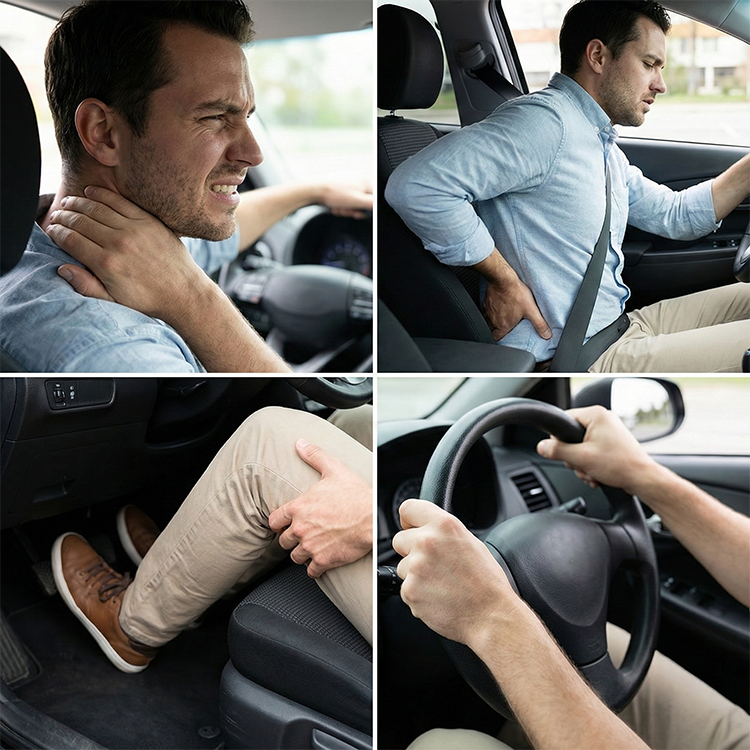
  • Neck stiffness makes it hard or painful to check blind spots
  • Back pain increases during or right after driving
  • Knee/hip stiffness creates a “lag” moving your foot between pedals
  • Hand/wrist fatigue affects steering comfort or grip
  • Avoidance (highways, parking, or night driving) because it feels physically exhausting
These aren’t automatic “stop driving” signs—but they are early warnings that your body may be limiting safe control.
If you’re 55+ (or managing chronic pain)
  • Drive at lower-stress times and avoid rushing.
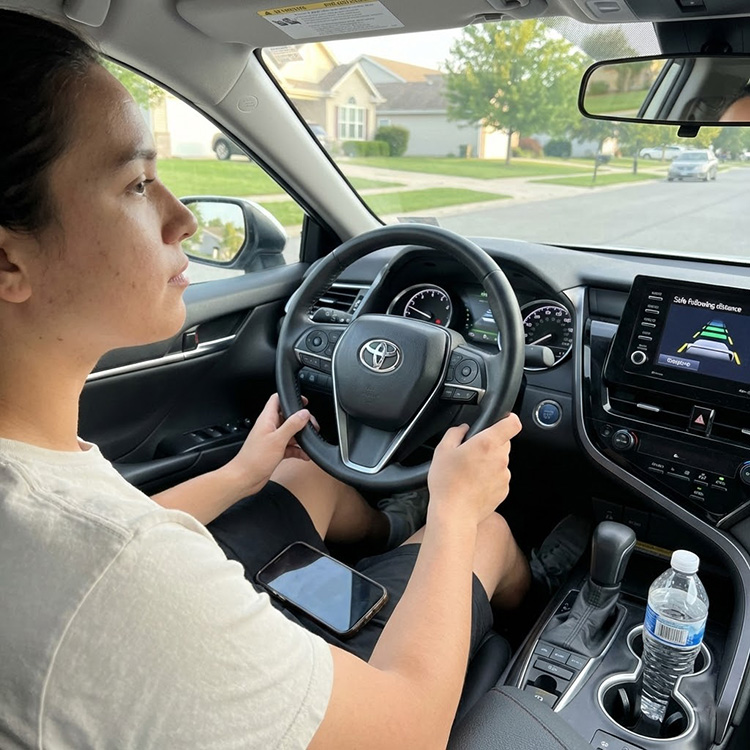
  • Increase following distance to “buy time” for safer reactions.
  • If pain affects head-turning, braking comfort, or pedal control, get checked.

"Because It’s Time To Get Back To What Matters Most"

Setting Up Your “Cockpit” for Safety (Simple, High Impact)

Small adjustments can reduce strain and make it easier to respond calmly—especially in stop-and-go traffic.

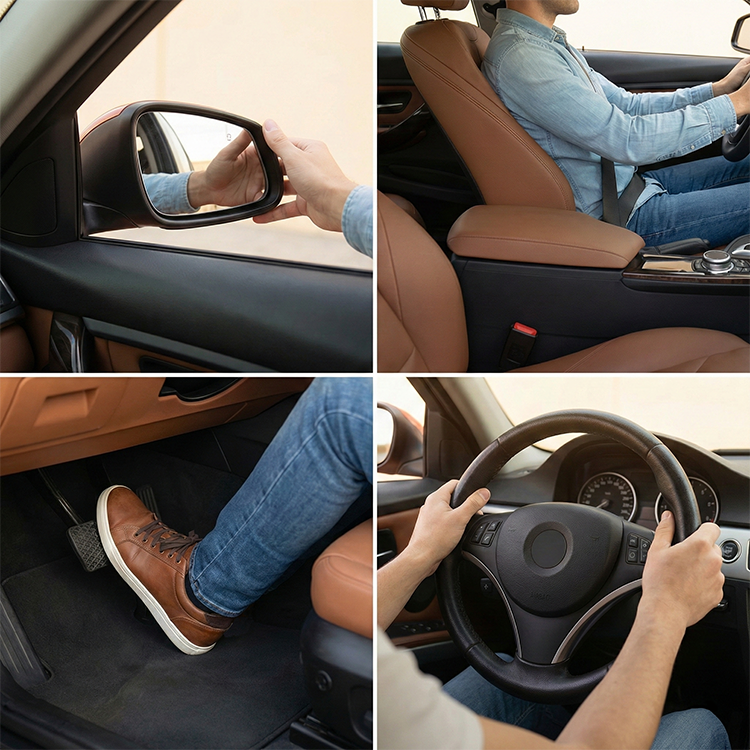
Mirror optimization

  • Consider a wider side-mirror setup to reduce blind zones and limit extreme neck rotation
  • Still maintain safe scanning habits—mirrors support you, they don’t replace awareness

Seat back angle (comfort guideline)

  • A slight recline (often around 100–110°) is comfortable for many drivers
  • Avoid reclining so far that you lose stability, visibility, or control

Pedal distance

  • Position the seat so your knee stays slightly bent when the pedal is fully depressed
  • Over-reaching can increase hip strain and reduce control

Relax your grip

  • Avoid the “death grip” on the wheel
  • Tension in the hands often becomes tension in the shoulders and neck

The “Drive-Ready” Mobility Routine (2 Minutes)

Before you start the engine, try these quick movements to reduce stiffness and help you feel more comfortable and responsive:
  • Shoulder rolls: 8–10 slow circles (backward)
  • Gentle neck turns: look left and right within comfort (5 each side)
  • Seated trunk rotation: hands on thighs, rotate slightly (3–5 each side)
  • Ankle pumps & circles: 10–15 reps (helps ankles feel less stiff for pedal transitions)
  • Posture reset + breathing: sit tall and take 3 slow breaths
Stop if you feel sharp pain, dizziness, or numbness/tingling.

Where Pain Changes Driving (And the Red Flags to Watch)

Pain doesn’t just “hurt”—it can change how you move. The key is noticing what’s changing and responding early.

Neck & shoulders (blind spots and backing up)

  • What changes: rushed scans, reduced head turning, stiff lane changes
  • What can help: mirror setup + calmer merges + gentle mobility work
  • Red flags: arm numbness/tingling, weakness, dizziness, or quickly worsening symptoms

Low back (sitting tolerance and focus)

  • What changes: discomfort pulls attention away; drives feel draining
  • What can help: posture adjustments + short breaks on longer trips
  • Red flags: increasing pain that limits daily function, or symptoms radiating down the leg

Hips & knees (pedals and getting in/out)

  • What changes: slower foot transfer, painful braking, difficulty exiting the car
  • What can help: seat distance adjustment + avoiding driving during severe flares
  • Red flags: delayed leg response, weakness, or unsteady balance (especially if you feel unsafe on pedals)

Hands & wrists (steering comfort and grip)

  • What changes: fast fatigue, tighter grip, “white-knuckle” driving in traffic
  • What can help: relax grip, reposition hands, reduce high-stress driving windows
  • Red flags: worsening pain, numbness/tingling, or reduced grip strength

Reflex-Friendly Driving Habits (Especially in Busy Traffic)

These habits don’t require athleticism—just strategy:
  • Increase following distance to reduce sudden braking pressure
  • Avoid rushed lane changes and last-second merges
  • Set navigation before you start driving
  • Keep distractions low (phone away, minimal multitasking)
  • Take breaks on longer drives—fatigue reduces reaction time

When It’s Time to Get Evaluated (Don’t Rationalize These)

Consider a professional evaluation if:

  • Pain limits head turning, braking comfort, or pedal control
  • You feel numbness/tingling, weakness, dizziness, or unsteady balance
  • Driving anxiety is increasing because of physical discomfort
  • Symptoms are worsening over time

This isn’t about being dramatic—it’s about safety. If your body is interfering with vehicle control, it’s worth taking seriously.

How Pain Free Orlando Can Support More Comfortable Driving

At Pain Free Orlando, the goal isn’t just short-term relief—it’s helping people move more comfortably in everyday life, including driving. Depending on your evaluation and goals, your care plan may include:

Don’t Let Pain Take the Wheel

Your car gets regular maintenance to stay reliable—your body deserves the same. If pain is changing how you drive, don’t wait for a “close call” to take action.
Schedule an evaluation to identify what’s limiting your mobility and build a plan for safer, more confident daily movement—on and off the road.

Articles

Pain Free Orlando,

Reactivating Your Body A Pain-Free Life Keep Your Life in Motion Restore Your Life Rediscover Your Freedom